Sphincterotomy, Botox, or LIFT: Decoding the Three Procedures Your Surgeon Will Name
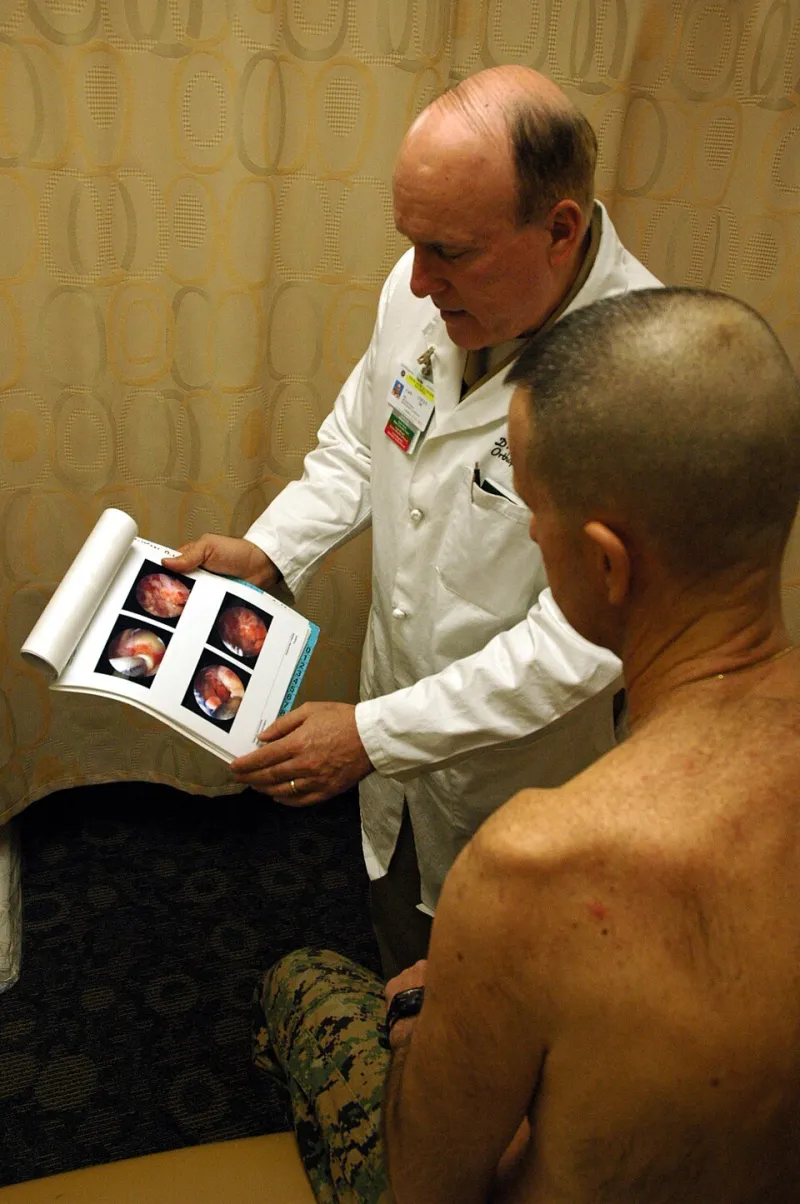
Photo: U.S. Navy photo by Mass Communication Specialist 3rd Class Jake Berenguer, Public domain, via Wikimedia Commons
Walk into any colorectal consultation with a chronic anal fissure, and you will likely hear three terms tossed around: Botox, LIFT, and lateral internal sphincterotomy. For a patient in pain, the vocabulary can be intimidating—but it should not be. Each option has a distinct logic, a distinct risk profile, and a distinct recovery arc. Understanding them before your appointment turns you from a passive recipient of advice into an informed participant in the decision.
First, Why the Sphincter Is the Target
Most chronic fissures share a common mechanism: the internal anal sphincter muscle is chronically tight, restricting blood flow to the fissure and preventing it from healing. Nearly every treatment—chemical or surgical—aims to relax that muscle just enough to restore circulation, without relaxing it so much that continence suffers. Keeping that trade-off in mind makes the three options much easier to compare.
Option One: Botox Injection
How it works. Botulinum toxin is injected directly into the internal sphincter, temporarily paralyzing a portion of the muscle for roughly two to three months. That window of relaxation gives the fissure a chance to heal on its own.
The evidence. Healing rates in published series generally fall in the range of 60 to 80 percent, with recurrence possible once the toxin wears off. The appeal is obvious: it is an office-based procedure with essentially no recovery time and a very low risk of permanent incontinence. Some patients experience temporary, mild gas or stool urgency.
Best suited for. Patients with moderate sphincter tone, women after childbirth, older patients, or anyone hesitant about cutting muscle. It is also frequently the first procedural step when medical ointments have failed.
Recovery curve. Same-day return to normal activity. Pain relief is often noticeable within days.
Option Two: Lateral Internal Sphincterotomy (LIS)
How it works. LIS is the gold-standard surgical treatment. The surgeon makes a small incision and divides a portion of the internal sphincter fibers, permanently lowering resting pressure. With the muscle no longer strangling the wound, the fissure typically heals within weeks.
The evidence. Success rates are high—commonly cited above 90 percent for healing—with recurrence rates in the single digits for most patients. The trade-off is continence risk: permanent incontinence to flatus or, rarely, stool occurs in a small minority of patients, with reported rates varying widely (often 1 to 5 percent, higher in some series). Surgeon experience and how much muscle is divided matter enormously—another reason to ask about a surgeon's procedure volume.
Best suited for. Patients with documented high sphincter tone and a fissure that has resisted ointments and Botox. For most otherwise-healthy adults with high-tone fissures, LIS offers the best odds of a definitive cure.
Recovery curve. Usually performed as a day-case procedure. Most people return to desk work within a week, with full healing of the fissure over four to six weeks. Postoperative pain is real but generally less severe than the fissure itself.
Option Three: LIFT (Ligation of the Intersphincteric Fistula Tract)—and Its Fissure Cousins
A note on terminology. LIFT was developed for anal fistulas rather than fissures, and you may encounter it (or related flap techniques, such as an advancement flap) in a combined or atypical case—when a fissure coexists with a fistula, or when sphincter division is considered too risky.
How it works. The LIFT approach works in the space between the internal and external sphincters, ligating and repairing tissue without cutting muscle. Flap-based repairs similarly close the fissure or associated defect using healthy tissue, preserving sphincter integrity entirely.
The evidence. For pure fissures, these muscle-sparing techniques are less commonly used than LIS, and success data is more limited. Their role is typically reserved for patients with low sphincter tone, prior sphincter injury, or coexisting fistula disease—precisely the patients for whom incontinence risk must be minimized at all costs.
Best suited for. Complex cases and continence-vulnerable patients.
Recovery curve. Slightly longer than LIS, often two to three weeks to comfortable daily function, with wound care instructions that matter more than in the other two options.
How to Choose: The Questions That Matter
Bring these to your consultation:
- What is my resting sphincter tone, and how does that shape your recommendation?
- What are your personal healing and incontinence rates for each procedure?
- If Botox fails, what is the next step—and how much time does trying it first cost me?
- Given my anatomy and history, which option gives me the best combination of cure and continence?
There is no universal winner. A young patient with high tone and a stubborn fissure may be best served by LIS; a patient with borderline continence may be better served by muscle-sparing alternatives despite somewhat lower cure rates. The right answer is the one matched to your anatomy—and now, you can discuss it fluently.