The Fear of Fissure Surgery Is Real—But Is It Justified? A Straightforward Look at Recovery
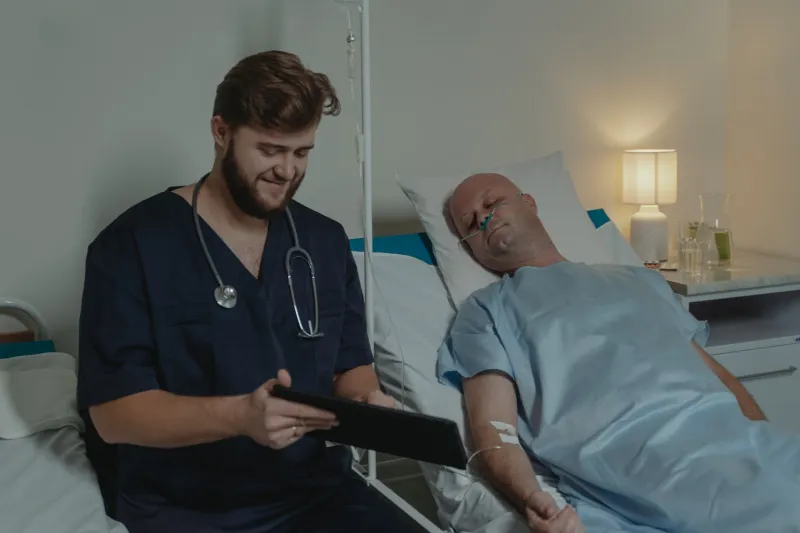
Let us acknowledge something that medical professionals do not always say plainly enough: the fear of surgical recovery is a rational human response. It is not a sign of weakness, nor is it something a patient should feel embarrassed about. Surgery involves anesthesia, incisions, and a period of physical vulnerability that understandably provokes anxiety—particularly for a procedure in a sensitive anatomical region.
What is worth examining, however, is whether the fear patients carry about fissure surgery is proportionate to what the procedure actually involves. In many cases, it is not. The gap between what patients imagine recovery will entail and what clinical evidence consistently shows is wide enough to be genuinely consequential—because that gap is keeping people in unnecessary pain.
Where the Fear Comes From
Anxiety about fissure surgery rarely emerges from direct experience. Most patients considering the procedure have never undergone it and have never spoken with someone who has. Their mental model is assembled from fragments: a general understanding that surgery in the anal region must be painful, vague recollections of difficult recovery stories shared by acquaintances, and the natural tendency to catastrophize the unknown.
The internet compounds this dynamic. Online forums and patient communities, while valuable for peer support, disproportionately amplify negative experiences. Patients who recover smoothly and return to normal life rarely feel compelled to document their journey at length. Patients who encounter complications, or who experienced fear and found it unfounded, sometimes do—but their accounts are often buried beneath those of outliers.
The result is a distorted information environment in which the typical recovery from lateral internal sphincterotomy—the most common surgical approach for chronic anal fissures—appears far more daunting than it actually is.
What the Procedure Actually Involves
Lateral internal sphincterotomy is a minimally invasive outpatient procedure. It does not require a hospital admission. The operation itself typically takes under thirty minutes. The surgeon makes a small incision to partially divide the internal anal sphincter, reducing the spasm that prevents fissure healing. Most patients are discharged the same day and return home—or, in the case of medical tourists, to their accommodation—within hours of the procedure.
General or regional anesthesia is used, depending on the surgical center and patient preference. Post-operative discomfort is managed with oral analgesics, and most patients describe the immediate post-operative period as meaningfully less painful than the chronic discomfort they experienced before surgery. This is not a minor point. Many patients report that the worst pain of their fissure journey was the condition itself, not the recovery.
Week One: What to Realistically Expect
The first week after surgery is the period patients worry about most, and it deserves honest description. There will be discomfort. The surgical site requires healing, and the first few bowel movements after the procedure are a source of considerable apprehension for most patients.
In practice, with appropriate stool softeners, adequate hydration, and dietary fiber, the majority of patients report that early post-operative bowel movements are manageable—often surprisingly so compared to what they anticipated. Sitz baths, warm water soaks of the affected area, provide meaningful comfort and are typically recommended two to three times daily during the first week.
Most patients with desk-based or remote work are capable of returning to professional responsibilities within five to seven days, depending on individual comfort levels. Physical labor and strenuous activity require a longer pause—typically two to three weeks—but sedentary and light activity resumes quickly.
The Complication Question
Fear of complications is perhaps the most persistent barrier to surgical decision-making, and it deserves a direct response. The most frequently cited risk of lateral internal sphincterotomy is temporary fecal incontinence—difficulty controlling gas or stool—which can occur when sphincter division affects continence function. This is a legitimate concern, and patients are right to raise it.
However, the clinical literature is clear about the rate at which this occurs and the severity with which it typically presents. Temporary incontinence, most commonly involving gas rather than stool, affects a minority of patients and resolves in the majority of those cases without further intervention. Permanent, significant incontinence is rare in the hands of an experienced colorectal surgeon. The procedure has been performed widely for decades, and its safety profile is well-established.
The risk of doing nothing—of allowing a chronic fissure to persist indefinitely—also carries consequences. Ongoing sphincter spasm, progressive tissue damage, and the psychological toll of unrelenting pain are not neutral outcomes. Weighing surgical risk requires weighing both sides of the equation honestly.
Reclaiming Perspective on Recovery
One of the most useful reframes a patient can adopt is this: recovery from fissure surgery is finite. It has a beginning, a middle, and an end. The discomfort of the first week diminishes through the second. By weeks three and four, most patients are functionally normal in daily life. By six to eight weeks, the surgical site has healed and the fissure that caused months or years of suffering is gone.
Chronic fissure pain, by contrast, has no natural endpoint without intervention. It recurs. It flares. It accompanies every bowel movement, every long drive, every uncomfortable seat. Patients who have undergone surgery consistently report that the recovery, in retrospect, was far easier to endure than the chronic condition it resolved.
A Word on Seeking Care Abroad
For American patients considering surgery at an international facility like Fissure Surgery Indore, the recovery timeline is unchanged by geography. The procedure is the same. The post-operative care protocols are the same. What differs is the cost, and for many patients, the quality of personal attention available at a dedicated surgical center.
Patients traveling from the United States typically plan a stay of seven to ten days in Indore, allowing for pre-operative evaluation, the procedure, and initial recovery before returning home. By the time of the return flight, most patients are comfortable and mobile. The remaining healing occurs at home, as it would with any domestic surgical approach.
The Decision Belongs to You
No one should be pressured into surgical intervention before they are ready. But no one should remain in chronic pain because fear—fear rooted in misinformation and worst-case thinking—prevented them from seeking a solution that evidence consistently shows is safe, effective, and transformative.
The fear is real. The question is whether it is justified. In most cases, when patients examine the evidence honestly, the answer is no.